Sunday, December 15, 2013

Journey to Sabah!!!

Assalamualaikum dan salam sejahtera para pengunjung http://myfreedom805.blogspot.com/..genap lh 3 bulan blogspot sya ni x update..haha..bukan apa, tlalu byk urusan yg plu diberikn prhtian..=D

Para pembaca budiman, pada entry kali ini, saya akan bercerita pula ttg percutian 4 hari 3 mlm sya dn kwn2 ke negeri di bawah bayu, Sabah!!!

Kami bertiga, Amjah dan Rosman pergi pada 8-11 Disember menggunakan penerbangan AirAsia..pnrbgn yg mgmbil msa slma 1 jam 20 mnit ini brgkt seawal 6.10 pagi dri Kuching International Airport..6.10 pagi?????!! Bayangkn lh btpa awalnya waktu itu..huhu

Setelah tiba di Kota Kinabalu, Sabah..kami terus mencari hotel penginapan di kwsn bndr..untuk makluman, disini terdapat byk hotel "budget" or inn utk menginap..tp sebaik-baiknya kta booking bbpa hri lbih awal krna hotel2 or inn ini slalunya penoh..stlh hotel ke-3, bru lh kami beroleh kekosongan..huhu..lpas check-in, trus g sarapan..lapar!!!


Hotel budget je..utk double bed, RM68 smlm..hehe


Lapar!!!

Pas mkn, jln2 kejap kt Waterfront..di sini lh terjualnya pelbagai jenis makanan, cenderamata, ikan, sayuran, dan buah-buahan..kwsn ni jugak byk kapal2 n boat2..sbb kt seberang Waterfront ni, ada bbpa buah pulau yg kta menarik..sya ingt 1 je..Pulau Manukan..hehe..1 lgi, nma laen untk area jualan ini Pasar Philippine.. sya pun tak bpa pasti knpa nma Philippine..maybe diorg ramai kt kwsn ini kot..hehe


Selepas tu, kami brtnya pula kpd driver boat pelancong ke pulau2 kt seberang tu hah..pakcik tu stju bgi byrn rm100 utk kami 3..bleh lagi dia tawarkn utk snorkeling, rm20 seorg! mantaplh..1st day dh g pulau..haha..total cost, rm160 utk 3 org..meh2 g pulau..snorkeling!!!


Posing ckit!!! hahaha


Let's snorkling!!! hahaha

Hampir 2 jam kami snorkling di Pulau Manukan ni..best! Berbaloi lh fly awal2 dri S'wak..haha..lpas tu dlm pkol 3 ptg, kmi pun brgkt balik ke Kota Kinabalu smla..penat lh..sblh mlm, dinner kt Pasar Philippine ni..ikan2 segar kot..hahaha


Boleh pulak jumpa member sma IPG kt cni..dia bercuti ngan family..hehe..untung2, ayah dia blnja kmi bertiga 3 mkn..alhamdulillah..rezeki..thanks Bani! =D


Hari kedua pulak, kami ber'3 pergi Kundasang n Ranau..dpt tgok Gunung Kinabalu b4 dia tutup puncak..haha..kmi org pergi guna van carta..pakcik van ni caj rm250 utk bwa kami bertiga jalan2 ke tmpt2 mnrik sktar Kundasang n Ranau..best!!!


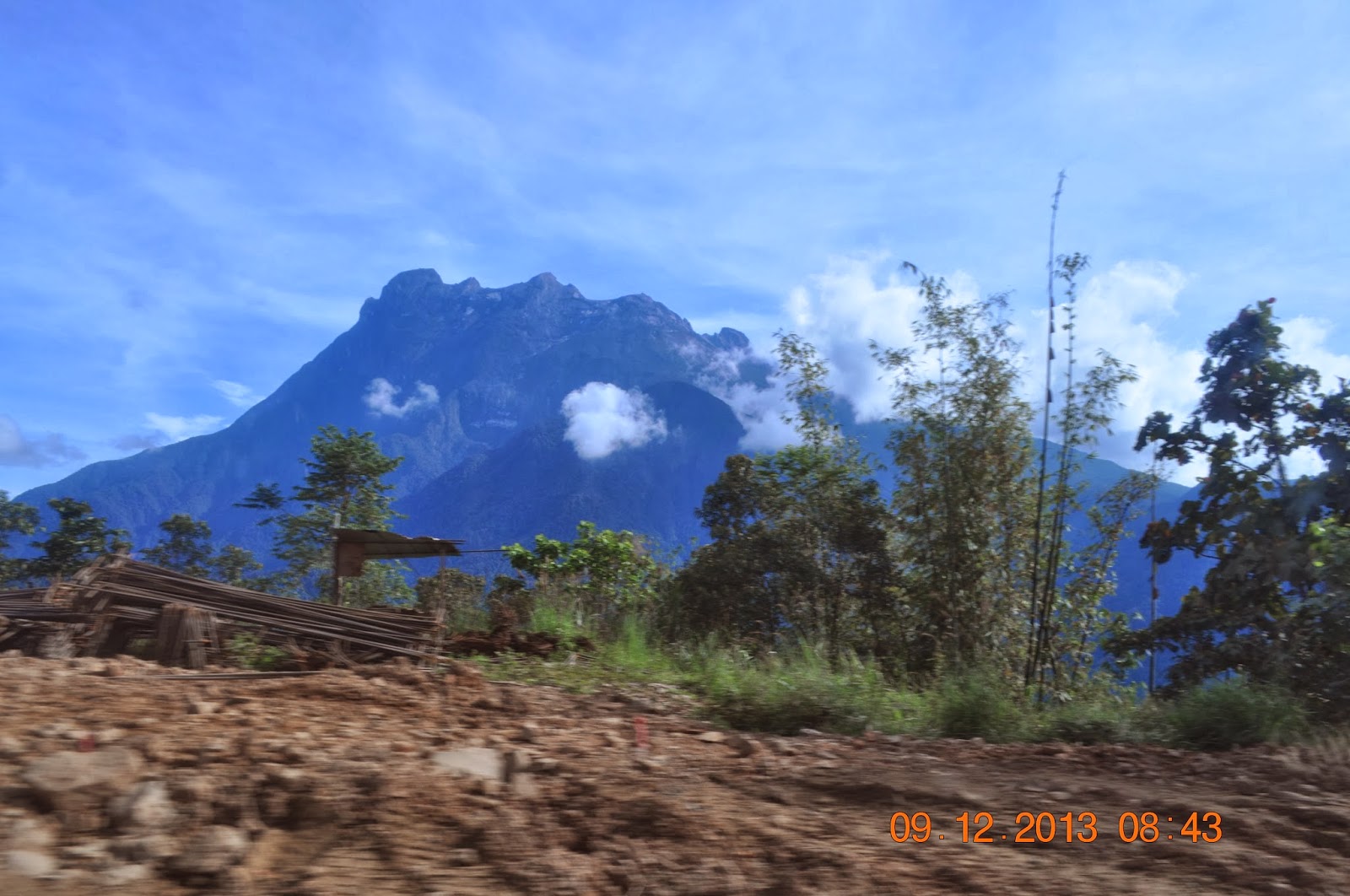


Untuk mkluman, di Ranau trdpt Poring Hot Spring..byrn msok cuma rm2 seorg..hehe


Dh puas mandi-manda, kmi pergi Ladang Ternakan pulak..terdapat beratus-ratus ekor lembu dan kambing terdapat di sini..background view pun cantik2..hehe..dgn gunung mghijau, dtmbh lagi udara segar, tempat ni mmg sebuah tempat yg amat menenangkan skli..=)


kt cne jugak dijual susu pelbagai perisa..ada susu pekat, susu coklat n so on..mmg sedap..hehe..lpas tu, kmi balik KK..trus pergi Rumah Terbalik..byrn msok cuma RM10 seorg..yg tak best nya, xboleh ambik gmbr dlm rumah tu..ni gmbr dri luar je..huhu


Then, dlm prjlnn balik ke bilik hotel, kami singgah kjap kt Masjid Atas Air..tp xmsok pun..rushing nk balik hotel..dh lewatkn..suma rushing..dh nk mgrib..


Hari ketiga, kami pusing2 sktr bdn je..pergi mall n pasar philippine bli brg2 nk bwa balik..cdrhti, baju, keychain, n so on lh..byk lh jugak yg sya bli..haha



Hari terakhir di Sabah..huhu..flight pkol 3.50..jln2 jap..


Demikian lh percutian 4 hari 3 mlm kami bertiga di negeri Sabah di bayu ini..sbnrnya, tak ckup pun 4 hari 3 mlm ni..kalau nk mlncong kt KK, Kundasang n Ranau, plg kurang pun smggu..in shaa Allah, bru puas kot..yg pasti, SABAH TERBAIK!!! hehe..baiklh..stkt ini shja entry sya kali ini..sblom itu, sya ingin mengucapkan jutaan terima kasih kpda para pembaca blog simple sya ini..maafkan atas sgla silap dn slh spnjg sya berkarya..smga kta bertemu lagi di tahun hadapan..farewell 2013, n all the best 2014! 
Wassalam...(^_^)


Tuesday, September 17, 2013

The Uses of Bibliotheraphy In Children's Concerns

Discuss how literature can be used “to heal” and deal with children’s concerns.

          Literature is one of the important elements in life. Why? Because through literature, we can express our feelings, convey our thoughts and show others our concern regarding matters in our daily life. To be able to use literature as a medium of communication, we have to get used to it at a young age. But, just like the adults, children also have their own concerns. And one of the ways to deal with this situation is by using bibliotherapy method. So, what is bibliotherapy method? What are the children’s concerns? In this essay writing, I will elaborate more about these issues.
            Pardeck (1994) defines that bibliotherapy generally refers to the use of literature to help people cope with emotional problems, mental illness, or changes in their lives. Based on this definition, we can understand that bibliotherapy is actually one of the methods to assist people settle down of emotional problems, mental illness and the changes that happen in their daily lives by using literature. The use of books, poems, short stories, rhyme, and poetry are the example of literature elements that actually we can use to help people around us. But in this writing, the focus is on the children’s concerns. Children concerns can be defined as the depression, conflict or situation that is faced by the children. Usually, these matters will affect the children mentally, emotionally, and physically. So, why should we use bibliotherapy instead of any other method?
            This is because bibliotherapy can help the children to identify and understand their own feeling. Children will know that they are not the only one who faced the problem, because the other children also faced the same situation. Adams and Pitre (2000) state that reading books give clients the chance to learn and relate to the experience of other people. From the experience of the others, children will be able to find a solution to the conflict by themselves. We as an adult are not responsible to find them the way, but we need to assist them in the way to make it. This is because it will help the children to be matured and thinking more often. Bibliotherapy also responsible to help a client to develop self-concept, increased understanding of human behaviors, and reduce emotional or mental pressures (Aiex, 1982).
            But, how can we use literature “to heal” and deal with children’s concerns? Actually, there are some ways to make it possible. Firstly, we as a teacher should identify the needs of individuals or groups of students. This is because we need to choose literature that deals with emotional and developmental difficulties or unfortunate situations that the students may be or will be experiencing. Then we can read the literature itself and let the students to hear it or we just simply recommend it to them.  If we choose to read aloud or to refer to some students regarding a particular poem, short story or books, we have to be sure whether it is suitable to the child’s age, gender, maturity and background. This is because the use of the appropriate materials will help the students more effectively. This also causes the students to respond directly to the materials they are given, so that change is effected through catharsis (a cleansing of the emotions, primarily through art), insight, or the “copying of character behaviors” (Gladding & Gladding, 1991).
            Next, the characters and the plot should be realistic and include honest problem-solving. The logic and truth regarding the stories are very important because we cannot simply let the students to follow something that does not even exist. By having something that is realistic and complete understanding of the situation, it helps them to copy the action or create their own solution to the problems.  Moreover, students may read assigned stories or books on their own or in small groups. By this way, the children who have the similar concerns could meet with each other. We should engage the students with activities that help them reflect on what they read, such as group discussion and dialogue journal writing ((Palmer, et al., 1997; Anderson & MacCurdy, 2000; Morawski & Gilbert, 2000). This will help them to get a better understanding of the conflicts that they faced.
            Furthermore, we can make the activities exciting because children or students love something that is fun to be done with. We can design activities such as asking open-ended questions, retelling stories and writing reactions. We even can ask them to act out the roles or maybe just using puppets to make the plays. The use of tape recording thoughts various art materials are highly recommended because all these things help the children discover some important aspects in their lives. Firstly, other children have similar feelings when confronted with the confusing situation. It makes them realise that they are not the only ones who experiences dilemmas because all children are actually encountering some difficulties in their lives.
Moreover, this kind of activities actually shows the students that facing the problem is the first step to solving it rather than running away from it. It is also telling them that there are a variety of ways to deal with the dilemma and they can decide what kind of action that should be take place. It maybe takes time to deal with the situation and they ought to be unsuccessful at first. But, it makes them realise to think of something else to settle the problems. Actually, we encourage them to encounter the situation and make decisions of their own, or choose which alternatives that they should take.
In conclusion, bibliotherapy is one of the best methods that should be used to encounter children’s concerns. But, the use of literature as an element in bibliotherapy will make the process of “healing” and deal with children’s concerns more effective and easier. If possible, we can involve children’s parents as well because they are the ones that most children believe and close to. By this way, both the parents and teacher can assist “to help” and deal with children’s concerns.


References:
Adams, S., Pitre, N.L. (2000). Who uses bibliotherapy and why? Canadian Journal of Psychiatry, 45(7), 645.
Aiex, N.K. (1982). Bibliotherapy fact sheet. Urbana, IL: ERIC Clearing House on Reading and Communication skills. ED. 234338
Gladding, S. T. & Gladding, C. (1991). The ABCs of bibliotherapy for school counselors. School Counselor, 39(1), 7-13.
Palmer, B. C.; Biller, D. L.; Rancourt, R. E.; & Teets, K. A. (1997). Interactive bibliotherapy: An effective method for healing and empowering emotionally-abused women. Journal of Poetry Therapy, 11(1), 3-15.
Pardeck, J.T. (1994). Using literature to help adolescents cope with problems. Adolescence, 29(114), 421-427. 

Sunday, September 1, 2013

Konsep LINUS (Bahagian 2)


1.5 Prinsip – Prinsip LINUS
Secara asasnya, LINUS memiliki 6 prinsip yang utama iaitu:
              i.        Didik hibur
             ii.        Pengulangan kata
            iii.        Ansur maju
           iv.        Latihan interaktif
            v.        Latihan dari mudah ke susah
           vi.        Belajar sambil bermain

1.6 Kriteria-kriteria pemilihan bahan pembelajaran dan pengajaran LINUS
Dalam proses pembelajaran dan pengajaran LINUS, pemilihan bahan yang betul amatlah penting. Hal ini kerana ia akan mempengaruhi keberkesanan program ini. Oleh yang demikian, berikut adalah kriteria yang perlu diambil kira dalam pemilihan bahan berkaitan iaitu:

              i.        mudah diurus atau ditadbirkan
             ii.        selamat tidak tajam, tidak terlalu berat dan bahaya
            iii.        nilai grafik yang tinggi
           iv.        warna yang ceria dan menarik
            v.        lasak digunakan
           vi.        boleh dipelbagai guna untuk lebih daripada satu aktiviti pengajaran dan pembelajaran

Oleh itu, para guru yang terlibat dalam pembelajaran dan pengajaran LINUS hendaklah sentiasa berhati-hati dan bijak dalam pemilihan bahan. Kegagalan mereka berbuat demikian boleh menyebabkan murid gagal mencapai matlamat yang ditetapkan.

1.7 Kemahiran Asas dalam LINUS
Dalam program LINUS ini, terdapat penguasaan kemahiran asas yang berbeza berdasarkan sama ada Numerasi atau Literasi. Berikut adalah pembahagian fokus kemahiran asas berdasarkan 2 kategori tersebut iaitu:
1.7.1 Kemahiran asas Literasi
Secara umumnya dalam Literasi, kemahiran asas ini dibahagikan kepada 3 peringkat seperti dibawah:
                      i.        Tahun 1 – Pelajar berkemampuan untuk  membaca, menulis dan memahami ayat mudah dengan jumlah perkataan minima sebanyak 500 patah perkataan sahaja.
                     ii.        Tahun 2 – Para pelajar boleh membaca, menulis dan memahami ayat mudah yang ada menggunakan kata sendi dengan jumlah minima sebanyak 800 patah perkataan sahaja.
                    iii.        Tahun 3 – Para pelajar berupaya untuk membaca, menulis dan memahami minima 1000 patah perkataan dan ayat mudah dengan kata sendi dalam satu perenggan.
Selain itu, terdapat 12 Konstruk yang diukur dalam Saringan Literasi iaitu:
a)        Konstruk 1  : Keupayaan membaca dan menulis huruf vokal dan konsonan.
b)        Konstruk 2  : Keupayaan membaca dan menulis suku kata terbuka.
c)        Konstruk 3  : Keupayaan membaca dan menulis perkataan suku kata terbuka.
d)        Konstruk 4  : Keupayaan membaca dan menulis suku kata tertutup.
e)        Konstruk 5  : Keupayaan membaca dan menulis perkataan suku kata tertutup.
f)         Konstruk 6  : Keupayaan membaca dan menulis perkataan yang mengandungi suku kata tertutup ‘ng’.
g)        Konstruk 7  : Keupayaan membaca dan menulis perkataan yang mengandungi diftong
h)        Konstruk 8  : Keupayaan membaca dan menulis perkataan yang mengandungi vokal berganding.
i)          Konstruk 9  : Keupayaan menulis perkataan yang mengandungi digraf dan konsonan bergabung.
j)          Konstruk 10 : Keupayaan membaca dan menulis perkataan yang berimbuhan awalan dan akhiran.
k)        Konstruk 11 : Keupayaan membaca dan menulis ayat mudah.
l)          Konstruk 12 : Keupayaan membaca, memahami dan menulis ayat berdasarkan bahan rangsangan
1.7.2 Kemahiran asas Numerasi
Seperti Literasi, Numerasi juga dibahagikan kepada 3 peringkat penguasaan iaitu:
a)    TAHUN 1
Kemahiran – Membaca, menulis dan mengira mengikut turutan nombor hingga 50.
Operasi asas – Faham fakta asas tambah dan tolak
Aplikasi – Mengira wang hingga RM 10, memahami masa dan ukuran asas
b)    TAHUN 2
Kemahiran – Membaca, menulis dan mengira turutan nombor hingga 100
Operasi asas – Faham fakta asas tambah, tolak, darab dan bahagi
Aplikasi – Mengira wang hingga RM 50, memahami waktu dalam jam dan mengukur panjang/pendek objek
c)    TAHUN 3
Kemahiran – Membaca, menulis dan mengira mengikut turutan nombor hingga 1000.
Operasi asas – Faham fakta asas tambah, tolak, darab dan bahagi
Aplikasi – Mengira wang hingga RM 100, memahami waktu dalam jam dan minit serta mengukur objek dalam unit piawai
            Dalam saringan Numerasi, ia juga melibatkan 12 Konstruk yang diukur iaitu;
a)        Konstruk 1 : Keupayaan pra nombor dan mengenal angka
b)        Konstruk 2 : Keupayaan membilang
c)        Konstruk 3 : Keupayaan memahami nilai nombor
d)        Konstruk 4 : Keupayaan membuat seriasi
e)        Konstruk 5 : Keupayaan mengenal mata wang Malaysia
f)         Konstruk 6 : Keupayaan menyatakan waktu
g)        Konstruk 7 : Keupayaan mengendalikan operasi asas
h)        Konstruk 8 : Keupayaan mengendalikan operasi asas melibatkan mata wang Malaysia
i)          Konstruk 9 : Keupayaan mengukur panjang objek, jisim objek dan isipadu.
j)          Konstruk 10 : Keupayaan menterjemah ayat biasa kepada ayat matematik dan sebaliknya
k)        Konstruk 11 : Keupayaan mengaplikasikan pengetahuan dan kemahiran dalam kehidupan harian terhad kepada nombor bulat
l)          Konstruk 12 : Keupayaan mengaplikasikan pengetahuan dan kemahiran dalam kehidupan harian melibatkan mata wang, masa dan ukuran panjang.

1.8 Penutup

Secara kesimpulannya, Program LINUS ini menegaskan usaha Kementerian Pelajaran Malaysia untuk mengatasi masalah literasi dan numerasi dalam kalangan murid yang berkeupayaan kecuali murid berkeperluan khas pada peringkat awal persekolahan. Inisiatif ini tidak akan berjaya tanpa sokongan daripada pihak sekolah mahupun para guru. Oleh yang demikian, semua pihak digesa untuk bekerjasama dan saling bertukar idea dalam memastikan kelancaran dan keberkesanan pelaksaan program ini. Dan yang paling penting sekali ialah kita mampu mencapai sasaran seperti yang diterangkan dalam perenggan pendahuluan di atas.

Konsep LINUS (Bahagian 1)

Program LINUS
1.1 Pengenalan
Pada Ogos 2009, Y.A.B Menteri Pelajaran, Tan Sri Dato’ Haji Muhyiddin bin Mohd. Yassin telah membentangkan Bidang Keberhasilan Utama (National Key Result Areas/NKRA) yang dikeluarkan oleh Kementerian Pelajaran Malaysia. Hal ini berikutan pihak KPM menyedari bahawa isu asas literasi dan numerasi masih belum dapat diatasi  sepenuhnya walaupun telah dilaksanakan pelbagai program pemulihan. Oleh itu, Program Literasi dan Numerasi telah dirancang dengan teliti dan sistematik untuk memastikan ia mampu membawa impak yang besar kepada proses pembelajaran pada peringkat sekolah rendah.
Sasaran untuk program ini telah mula dilaksanakan pada tahun 2010 yang melibatkan murid Tahun 1 di sekolah rendah. Selain itu, Sektor Dasar dan Pembangunan Pendidikan, Kementerian Pelajaran Malaysia telah diamanahkan untuk mengawas, melaksana dan menyelaras Ministry Key Performance Indicator (NKPI) KPM iaitu semua murid yang tiada masalah pembelajaran berupaya menguasai kemahiran membaca, menulis dan mengira selepas mengikuti pendidikan tiga tahun di peringkat rendah pada akhir tahun 2012.
Sebenarnya, Program Literasi dan Numerasi ini merupakan penambahbaikan daripada program Kelas Intervensi Awal Membaca dan Menulis (KIA2M) untuk murid Tahun 1 yang dilaksanakan mulai tahun 2006. Selain itu, murid berkeperluan khas yang  dinyatakan di atas meliputi murid bermasalah pembelajaran, masalah pendengaran, masalah pertuturan, masalah penglihatan, masalah kepelbagaian deria, masalah fizikal, dan terencat akal, kurikulum yang khusus telah dibina.untuk memastikan Program ini terlaksana dengan jayanya dan mencapai matlamat yang ditetapkan, terdapat beberapa garis panduan atau kriteria yang harus diikuti oleh pihak sekolah dan para guru yang terlibat. Kerjasama antara mereka merupakan kunci kepada keberhasilan program ini.

1.2 Definisi LINUS
Definisi LINUS terbahagi kepada dua iaitu:
1.2.1 Definisi Literasi – Ia merangkumi kebolehan murid dalam membaca, menulis serta memahami perkataan, ayat tunggal dan majmuk yang mudah. Dia juga hendaklah mampu mengaplikasikan pengetahuan serta kemahiran matematik dalam kehidupan seharian.
1.2.2 Definisi Numerasi – Ia meliputi kemampuan untuk melakukan operasi asas matematik dan memahami idea matematik yang mudah. Dia juga hendaklah mampu untuk mengaplikasikan pengetahuan serta kemahiran matematik tersebut dalam kehidupan seharian.

1.3 Matlamat
LINUS bertujuan melahirkan murid yang normal iaitu tidak ada masalah pembelajaran. Mereka hendaklah menguasai asas Literasi iaitu Membaca dan Menulis serta asas Numerasi iaitu Mengira selepas tahun mengikut pendidikan rendah menjelang 2012.

1.4 Strategi Pelaksanaan di Sekolah
Program ini wajib dilaksanakan di semua sekolah rendah yang terdiri daripada SK, SJKC, SJKT serta SABK. Pada setiap tahun, terdapat 3 peringkat saringan yang dilaksanakan untuk mengenal pasti murid yang layak untuk program ini. Berikut adalah masa peringkat saringan tersebut dilaksanakan:
                      i.        Saringan 1 (Mac) – P & P Linus (April-Mei)
                     ii.        Saringan 2 (Jun) – P & P Linus (Julai-Ogos)
                    iii.        Saringan 3 (September) – P & P (Oktober-November)
Secara umumnya, semua murid Tahun 1 diwajibkan menduduki ujian LINUS Saringan 1 pada awal tahun. Ini bertujuan untuk mengukur tahap penguasaan kemahiran asas mereka. Ujian saringan ini dilaksanakan samaada oleh guru Bahasa Melayu, guru Matematik mahupun guru Pemulihan. Manakala medium perantara yang digunakan untuk Numerasi ialah dwibahasa iaitu Bahasa Melayu-Bahasa Inggeris, Bahasa Cina-Bahasa Inggeris, dan Bahasa Tamil-Bahasa Inggeris.
      Tambahan pula, guru Pemulihan yang khas ditempatkan di sekolah adalah berdasarkan nisbah murid LINUS tegar. Nisbah guru dan murid bagi program ini ialah seorang guru untuk lima belas orang pelajar (1:15). Ini bertujuan supaya guru mampu memberikan sepenuh tumpuan kepada kumpulan murid berkenaan. Untuk literasi, para guru pemulihan dicadangkan untuk melaksanakannya selama satu jam dan memberikan tumpuan kepada 4 atau 5 orang murid sahaja. Untuk numerasi, pelaksanaannya juga dalah satu jam. Kedua-dua sesi ini hendaklah dilaksanakan pada setiap hari.

      Selain itu, guru sedia ada untuk mata pelajaran bahasa Malaysia dan Matematik yang melaksanakan aktiviti hendaklah diberi latihan khusus dalam teknik pemulihan dan bimbingan. Ini bertujuan membantu mereka menangani murid yang mempunyai masalah literasi dan numerasi. 

Tuesday, June 18, 2013

The Contribution of Ibnu Khaldun and His role in the Philosophy of Education

Ibnu Khaldun, a name that belongs to a very important person who had given a lot of significant philosophical in human history. He is very expert in the field of anthropology, politics, law, economics, philosophy, sociology, and even education. Born in Tunis on May 1332 AD, Ibnu Khaldun was actually coming from a family of scholars and political background. His ideas have reflected their importance in the history of universal thought as much as within the Islamic perspectives. His thoughts are all self – created. He created genuine and innovative ideas. His ideas have not lost their relevance as time has passed. Ibnu Khaldun concept of ideologies has been accepted and commented upon by historians, politicians, economists, teachers, educators and even environmentalist. Ibnu Khaldun’s masterpiece of art, The Muqaddimah has been translated into different kind of world languages.

So, we knew that Ibnu Khaldun has a very deep influence towards the history of humankind. But, do we know his contribution towards education philosophy? How about his role? In this essay, we will elaborate more on his contribution towards education philosophy as well as his role towards it. Actually, there are so many things that he had contributed and created in order to lead us to the suitable and correct path of educational philosophy.

Firstly, he showed us the correct method of teaching. It is by imparting information to students at their level of comprehension. He said that information should be given to students gradually in stages, lower to higher, which they may understand. If teaching methods are gradually applied to students, the education will prove more effective for them. In the beginning, the main principles of information and sciences should be taught. The student's ability in learning this subject also should be considered. The subjects to be taught should be provided with this method until completion. Such a method will result in the students showing more tendencies to the given information. However, the students’ tendency will remain weak and insufficient. The students during this period will have learnt to absorb the given information. Based on this, the teacher should revise the subjects with a little more elaboration and continue to provide the information in a wider aspect until completion. Then the students’ knowledge and adjustments shall be enhanced accordingly. The teacher shall then revise the subject three times over from the beginning. During this period, the teacher shall be able to explain more difficult and deeper aspects of the subject. This will result in the students reaching their utmost aptitude.

Next, Ibnu Khaldun mentioned that the students should not be forced to memorize. This is because teachers usually explain the difficult and deeper aspects of subjects which students are learning for the first time. This is actually forcing the students to memorize the subject. They accept this as the correct form of teaching. However, the students’ brains are not capable of understanding this. It’s difficult enough for them to learn a lesson. As results, students become lazy, their mind rejects the information and the period of learning is prolonged. This is a result of poor teaching methods. The teacher should not overload the students with lessons beyond their capabilities and capacities. Otherwise, the issues will be scrambled and subjects will become complex. When teaching, one must provide thought and revision. Memorization should be avoided.

In addition, it is harmful to be very strict towards the student especially if the student is at a young age. According to Ibnu Khaldun, this sort of aggressiveness negatively influences the child. It may affect the psychology of the child and create unhappiness as well as interrupt his desire to work and study. This will lead the child to misbehaviour and to live in fear. He will learn to display rebellious action to those really within his heart. In time, this will become his nature and part of his character. As a result, it will corrupt the enhancements of social activities, development and the concept of self-esteem and family values. Therefore, teachers, mothers and fathers should not be aggressive towards children in order to teach them obedience and manners.

Furthermore, two subjects should not be taught together. The student should not pass on to another subject while the first remains incomplete. According to Ibnu Khaldun, this will separate the heart from the mind. Concentration on learning both subjects at the same time unfortunately leads to an incomplete knowledge of both the subjects which the student could not afford to absorb information correctly. He also mentioned about the appropriate length of subjects taught. According to Ibn Khaldun, an over-summarized text on certain information as well as an over-extended text will create difficulty in learning the actual information. This is because an over-summarized text will lead to the missing point of view or details from the actual information. While if the text is over-summarized, this will lead to other conflicts such as too much information at once and very hard to recognize which one is more important than the others. This entire situation will lead to the difficulty in learning the actual information.

Last but not least, his role in the philosophy of education. Ibnu Khaldun played a very important role such as doing research regarding this philosophy, introducing the new and correct method of teaching, recognizing the student behaviour as well as the teacher itself. He wrote a lot of books that concerned on the educational philosophy and give everyone a chance to read it no matter who they are. He practically used the method itself and taught people about it. That is why he is very remembered by the people of the world because he had contributed a lot of effort and knowledge towards us. No matter whom the people are, neither East nor West, they will amaze with the ideology and philosophy of Ibnu Khaldun.